

THE TRINITY AND THE BIBLE

THE TRINITY AND THE BIBLE
By Daniel McMillin

INTRODUCTION
Herman Bavinck said, “The entire Christian belief system, all of special revelation, stands or falls with the confession of God’s Trinity. It is the core of the Christian faith, the root of all its dogmas, the basic content of the new covenant.” The doctrine of the Trinity reconciles and wrestles with the identity of the one God who is revealed as Father, Son, and Spirit. This doctrine is a matter of revelation that requires God to unveil His triune nature. In the Bible, we find these glimpses of the thrice-holy God’s glory.
The Bible does not use the word “Trinity” to describe God. It was not until Tertullian introduced the term "trinity" (lat. trinitas) in the second century. However, while these inspired men do not employ the word "trinity" in the Scriptures, the trinity is arguably a Biblical doctrine that undergirds the Bible’s presentation of God. The doctrine of the Trinity is the logic of Scripture that explains how the Father, Son, and Spirit can be called the “one God.” Additionally, the New Testament authors do not find it problematic confessing their belief in the one God (monotheism) and viewing the Father, Son, and Spirit as God (trinitarianism).

As B.B. Warfield said, “The whole book is Trinitarian to the core; all its teaching is built on the assumption of the Trinity; and its allusions to the Trinity are frequent, cursory, easy and confident.” The word "trinity" is meant to convey a biblical truth about God. Aquinas wrote, "The name Trinity in God signifies the determinate number of persons. and so the plurality of persons in God requires that we should use the word trinity; because what is indeterminately signified by plurality, is signified by trinity in a determinate manner." God knows Himself as Triune and reveals Himself as such. In other words, the eternal Trinity has always been the Father, Son, and Spirit and unveils this truth that has always been so. As Scott Swain writes, “Only the persons of the Trinity know the persons of the Trinity. Therefore, only the persons of the Trinity can make known the persons of the Trinity. The revelation of the Trinity is a matter of divine self-revelation, divine self-presentation, divine self-naming.”
The classical description of the Trinity is that there are three divine persons and one divine essence...but is that biblical? The goal of this endeavor is to determine whether or not the doctrine of the Trinity is backed up by the bible. In response, Brandon Smith suggests, “The doctrine of the Trinity seeks to explain the biblical data about who God is.” When analyzing the biblical data, we can uncover the doctrine of the Trinity in three ways: divinity, distinction, and dynamics.

DIVINITY
The doctrine of the Trinity is admittedly a marvelous mystery in the Christian faith but this does not mean we cannot know anything about the Trinity or that we cannot know that there is a Trinity. Instead, what is to be admitted, as Vern Poythress states, "we cannot comprehend it because God alone is God and we are not." As we approach this doctrine, we are meant to search the Scriptures with humility as we wrestle with the knowability and incomprehensibility of the Triune god. One way to catch a glance at the Trinity is to see the divinity of the Father, Son, and Spirit. In Scripture, the divinity of each person is revealed through the divine names, attributes, and honors.
DIVINE NAMES
First, the divine name is attributed to the Father, Son, and Spirit. The proper name of God (Hb. YHWH, Elohim, Adonai) is the Bible’s unique way of describing the unique essence and existence of the divine (Ex. 3:14-15). Israel’s deity is described by name as the one unique “Lord” and “God” (Deut. 6:4). In the New Testament, the Father, Son, and Spirit possess the divine name (Gk. Kurios, Theos). The Father, Son, and Spirit are each identified as the “Lord” and “God” of Israel and the Church. All three persons are identified as “Lord”: Father (Matt. 11:25; Luke 10:21; Acts 4:24; Jam. 3:9), Son (Matt. 3:3; 22:44; Mark 1:3; 12:36; Luke 3:4; 20:42-43; John 1:23; 2:32; Acts 1:224; 2:34-36; 4:33; 7:59-60; 8:16; 9:17; 11:20-21; 16:31; 20:21; Rom. 10:9-13; 14:8-9; 1 Cor. 1:2; 8:6; 12:3; 16:22; 2 Cor. 4:5; 12:8-9; Gal. 6:14; Eph. 6:23-24; Phil. 2:9-11; Col. 3:24; 1 Thess. 4:16-17; 2 Thess. 1:7-12; 2 Tim. 4:8; Heb. 1:10-13; Jam. 5:7-8; 1 Pet. 2:3, 7-8; Rev. 22:20-21), and Spirit (Luke 4:18; Acts 5:9; 8:39; 28:25-27; 1 Cor. 12:4-6; 2 Cor. 3:17-18; 13:13; Heb. 3:7-11). All three persons are identified as “God”: Father (John 6:27; 8:54; 17:3; 20:17; Rom. 15:6; 1 Cor. 8:6; 2 Cor. 1:3; 11:31; Gal. 1:3-4; Eph. 1:17; 4:6; Phil. 1:2; Col. 1:3; 1 Thess. 1:1; 2 Thess. 1:2; 1 Pet. 1:2-3), Son (John 1:1, 18; 5:18; 10:30-33; 20:28; Rom. 9:5; Phil. 2:6; Col. 1:15-20; 2:9; 1 Tim. 1:17; Titus 2:13; Heb. 1:2-3, 8; 2 Pet. 1:1; 1 John 5:20), and Spirit (Acts 5:3-4; Rom. 8:9-11; 1 Cor. 2:10-11; 2 Pet. 1:21).
DIVINE ATTRIBUTES
Second, the Father, Son, and Spirit also possess the divine attributes: self-existence (Ex. 13:14-15; John 8:58; John 14:17-20), eternity (Is. 40:28; 1 Tim. 1:17; Heb. 9:14), immutability (John 14:16-17; Heb. 13:8; Jam. 1:17), knowledge (Ps. 139:1-5; John 1:48; 14:26), power (Neh. 9:6l; John 6:63; Col. 1:15-20), presence (Ps. 139:7-12; John 17:5; Eph. 1:13-14), goodness (Ps. 145:9; Matt. 12:18; John 19:11), justice (Jer. 9:24; John 16:8-11; 1 Pet. 2:22-24), holiness (Is. 6:3; Rom. 1:4; Heb. 4:15), and love (John 3:16; Rom. 5:5, 8-10).

DIVINE WORSHIP
Third, all three persons are worshipped as God as we see the Father (Matt. 6:9-13; 11:25-27; Luke 10:21-22; 11:2-4; John 4:21-24; 11:41-42; 12:27-28; 16:23; 17:1-26; Rom. 1:8; 15:6; 2 Cor. 1:3; Gal. 1:4-5; Eph. 1:3; 3:14; 5:20; Phil. 4:20; Col. 1:3, 12; 3:16-17; 1 Thess. 1:2-3; 1 Pet. 1:3; 5:11; Rev. 7:10-12; 11:16-17; 15:3-4), Son (Matt. 2:2, 8, 11; 4:9-10; 8:2; 9:18; 14:33; 15:25; 20:20; 21:9; 26:26-28; 28:8-9, 17; Mark 5:6-7; 15:19; Luke 4:7-8; 22:19-20;24:51-53; John 5:23; 9:35-38; 12:13, 20; 14:14, 22-24; 20:26-29; Acts 1:24-25; 7:59-60; 9:14; 22:16; Rom. 3:7; 10:12-13; 11:36; 15:7; 1 Cor. 1:2; 10:16-22, 31; 11:23-2616:22; 2 Cor. 4:15; 12:8-9; Eph. 5:18-20; Phil. 1:11; 2:9-11; Col. 3:16; 1 Tim. 1:17; Heb. 1:6; Jude 24-25; Rev. 1:4-5; 4:11; 5:9-10; 10:10; 22:8-9), and Spirit (Rom. 14:17; 2 Cor. 13:14; Eph. 6:18; Phil. 3:3; Jude 20).

DISTINCTION
Another way we discover the doctrine of the Trinity is by recognizing the distinctions among the divine persons, that is, the Father, Son, and Spirit. There is only one God in the Bible. The Old and New Testament understood univocally describe the one unique God over all things (Ex. 20:3; Deut. 4:35, 39; 6:4, 13; 32:39; 2 Sam. 7:22; 1 Ki. 7:60; 2 Ki. 19:15; Neh. 9:6; Ps. 18:31; 86:10; Is. 43:10-11; 44:6; 45:5-6, 18, 21-22; 46:9; 48:11; Hos. 13:4; Zech. 14:9; Mark 12:29; Luke 4:8; John 1:18; 5:44; 10:30; 14:6, 9-11; 17:3; Rom. 3:30; 1 Cor. 8:4-6; Gal. 3:20; Eph. 4:4-6; 1 Tim. 1:17; 2:5; Jam. 2:19; Jude 25; Rev. 15:4). There is only one being who is God and this God has revealed Himself as the holy Trinity. The one God is revealed as the blessed Trinity.
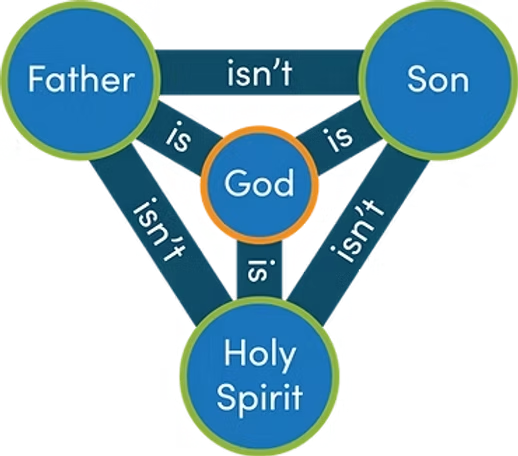
The doctrine of the Trinity affirms that there are three distinct persons and one divine essence or substance. The personal names “Father,” “Son,” and “Spirit” distinguish the three persons of the Trinity (Matt. 3:16-17; 28:19; John 1:1-3; 14-17; Rom. 5:1-2, 5-11; 8:1-4, 9-11, 14-17, 26; 1 Cor. 8:4-6; Gal. 4:4-7; Eph 1:3–14; 2:18-22; 1 Pet. 1:1-5, 11-12). Swain noted, “While the New Testament identifies the Father, the Son, and the Spirit with the one true God, it preserves real distinctions between the three as well…the personal names signify that which distinguishes the three from one another within the singular being of God.” The Bible ought to define how we view the Trinity and is our best source of understanding. However, there are many bad models on the Trinity that have been heavily debated over the centuries and do not accurately portray the God of the Bible.
PARTIALISM: The three persons are not three parts of the divine being who come together to make one God whole.
MODALISM: The divine persons should not be confused with one another as three separate modes or forms of God but as three distinct persons.
TRITHEISM: The Father, Son, and Spirit should not be understood as three separate deities but as one divine being.
UNITARIANISM: The oneness of God is not in personhood but in substance.
SOCIAL TRINITARIANISM: There are not three separate centers of consciousness within the Godhead, but each divine person acts and wills as one.
In sum, the Trinity is not a hierarchy, three parts of a whole, or three separate Gods. Rather, God is one (in being) and three (in persons).

DYNAMICS
The final way the Trinity is revealed in the Scriptures is by observing how the three persons relate to one another as one God. The dynamics between the Father, Son, and Spirit are shown in their coinherence and divine action. All three persons are one with one another. The mutual indwelling of the Father, Son, and Spirit are seen as each person enjoys eternal fellowship through this personal coinherence. (John 10:30, 38; 14:10-11; 17:3, 11, 21-23; 1 Cor. 2:10–11). The divine persons share this in-one-anotherness as they dwell within one another eternally. The three persons share in eternal love, joy, and glory as Father, Son, and Spirit. As Augustine said, “Each are in each, and all in each, and each in all, and all are one.”

We also catch a glimpse at the Trinity through the external works of God. Adonis Vidu describes the inseparable operations of the Trinity as three divine persons “share the divine agency of the one God.” As Donnie DeBord suggests, all three persons act “with one undivided and inseparable divine essence.” The Trinity is revealed through His activity in time as the Father, Son, and Spirit work inseparably in creation, revelation, incarnation, salvation, and resurrection. When we see the work of the Trinity, the formula that Scripture produces is: All things are from the Father, through the Son, in the Spirit.
CREATION:

The act of creation is always attributed to God (Gen. 1; Ps. 102:25-27; Job 38:4-7; Jer. 32:17) as the Father created all things (Gen 1:1; Isa 40:12; 44:24; 1 Cor 8:6), by the power of the Word who acts as the agent and purpose of creation (John 1:3; Rom. 11:36; 1 Cor 8:6; Col 1:15-17; Heb 1:2-3; Rev. 4:11), and the Spirit who hovered over creation giving life to all things (Gen 1:2; Job 33:4; Ps 33:4; 104:30).
REVELATION:

The Scriptures are God-breathed (2 Tim. 3:16-17) as the Father has spoken the words of revelation through the Son in the Spirit (John 12:49; Heb. 1:1-2), the Son has revealed the glory of the Father by the power of the Spirit (Matt. 11:27; Luke 24:27, 44; John 1:14, 18; 5:39, 46; 14:9-10; 17:4-8; Eph. 2:17-18; Col. 1:15; Heb. 1:2-3), and the Spirit testifies the Son of the Father and moves the human authors in the process of inspiration (John 14:25-27; 15:26-27; 16:12-15; 1 Cor. 2:10-12; 2 Cor. 3:17-18; 1 Pet. 1:10-12; 2 Pet. 1:20-21).
MISSIONS:

The divine missions reveal the Trinity as the Father sent the Son, the Son was sent by the Father, and the Spirit was sent by the Father through the Son (Is. 61:1-2; Jer. 31:31-34; Ez. 36:25-28; Joel 2:28-29; Matt. 10:40; Mark 9:37; Luke 4:18; 9:48; 11:13; John 3:16-17; 5:23-24, 30, 36-38; 6:29, 38-39, 44, 57; 7:16, 28-29; 8:16, 18, 26, 29; 10:36; 11:42; 12:44-49; 13:20; 14:16–17, 26; 15:26-27; 16:13-15, 27-28; 17:3, 8, 18, 21, 23, 25; 20:21; Acts 1:8; 2:17-21; 2:33; 3:26; 6:7; Rom. 8:3-4; Gal. 4:4-6; 1 Thess. 4:8; Titus 3:5-6; Heb. 3:12; 9:14; 1 Pet. 1:2; 1 John 3:24; 4:9-10).
SALVATION:

Only the Triune God can save (Ps. 3:8; Eph. 1:3-14; 2:18-22; 1 Pet. 1:1-5) as the Father lovingly wills and predestines us (John 5:19-23; Eph. 1:3-6; 2:4-7; Titus 2:10-14), the Son suffers and sacrifices Himself to redeem us Matthew 26:28; Mark 10:45; John 1:29; 10:11; Acts 2:24-26, 38; 4:12; 10:43; 13:38-39; Rom. 3:21-28; 4:23-25; 5:1, 6-11; 1 Cor. 6:11; 15:3; 2 Cor. 5:14-21; Gal. 1:4; 2:20; 3:13; Eph. 1:7-12; 2:4-6, 13-16; Phil. 3:8-9; Col. 1:13-14, 20-22; 2:13-14; Heb. 1:3; 2:9; 9:11-28; 10:1-18; 1 Pet. 2:24; 3:18; 1 John 2:21; 4:10; Rev. 5:9), and the Spirit applies and guarantees our salvation as our seal (Rom. 8:18-27; 1 Cor. 6:17-18; Eph. 1:13-14; 2 Thess. 2:13-14; Titus 3:5-6).
RESURRECTION:

The Triune God raised Jesus from the dead (Luke 24:6-7; Acts 2:24, 32; 3:15; 4:10; 5:30; 10:40; 13:30, 33-34; Rom. 1:3-4; 4:24; 10:9; 1 Cor. 6:14; 15:15; 2 Cor. 4:14; Eph. 1:19-20; Col. 2:12; 1 Thess. 1:10; Heb. 13:20; 1 Pet. 1:21) as the Father (Gal. 1:1; Rom. 6:4), the Son (John 2:19-21; 5:21, 26; 10:17-18; 11:25-26), and the Spirit (Rom. 8:11; 1 Tim. 3:16; 1 Pet. 3:18) worked together in resurrecting Jesus from the dead.
CONCLUSION
The God of the Bible has revealed Himself as the holy Trinity who is supremely glorious. It is the blessed Trinity that alone is worthy of our praise and adoration. As Fred Sanders said, “There was never a time when God was not glorious as Father, as Son, and as Holy Spirit.” When we read the Scriptures, our response ought to be to give glory and honor to the Triune God. Our lives are shaped by the Trinity thus our praise is meant to be framed in a Trinitarian shape where all three persons are worshipped as God. Our praise ought to reflect God’s identity and so we are to worship God as one and three because that is who God is. As Scott Swain wrote, “Christians praise the triune God because that is how God presents himself to us in Holy Scripture: as one God in three persons, the Father, the Son, and the Holy Spirit.”
This glory to the Father, Son, and Spirit is a directing of a Trinitarian theology—seeking the face of God. the doctrine of the Trinity is a revelation of the heart of God, the face of God, and the ultimate identity of who God is confessed on the basis of His works in salvation history. Once both the Old and New Testaments are in view, we may then move to see that all glory belongs to the God of salvation history, the God of the Bible who is behind the Gospel. He is the god who sent His Son because He eternally had a Son. The one who poured out His Spirit because from all eternity in union with the Son He ahs existed as Father, Son, and Spirit. It is this God who has called us into union with Him as the holy Trinity.
BOOK RECOMMENDATIONS:

Scott A. Swain's The Trinity: An Introduction is an excellent theological treatment on the doctrine of the Trinity that analyzes the divinity of the three persons and uncovers the trinitarian grammar of the Bible. Swain is a premier scholar on the doctrine of the Trinity in the field of systematic theology who helpfully lays the foundation for God to enter the scene as the Father, Son, and Spirit. For further study, one of his other works is The Trinity and the Bible: On Theological Interpretation where he gives various essays that illuminate the climate of trinitarian discussions within the twenty first century.

Brandon D. Smith's The Biblical Trinity: Encountering the Father, Son, and Holy Spirit in Scripture wonderfully presents the reader with many important trinitarian passages that demonstrate how this doctrine is not only biblical but also essential. Smith's exegesis of these New Testament passages is a handy resource for those who are invited to the Scriptures to discover the biblical doctrine of the Trinity from an expert in New Testament studies with a special interest on this subject. For further study, his book The Trinity in the Canon: A Biblical, Theological, Historical, and Practical Proposal is a great contribution that collects many essays that focus on the Trinity in each book of the New Testament.

Augustine of Hippo's De Trinitate is the premier work on the Trinity throughout all church history. Augustine is arguably the most influential theologian of all time which is certainly due, in part, to his writings on the Godhead. For the most part, Augustine's book shapes how we contemplate the Trinity and offers a thorough explanation and defense of the Triune God. For other books that may complement this volume, I would suggest Lewis Ayres' Augustine and the Trinity alongside Nicaea and Its Legacy: An Approach to Fourth-Century Trinitarian Theology.


Comments